
Easter is now past, and we have to figure out what it means for us. (See, on Easter, there's plenty to do: stories to tell, eggs to search for, lilies to smell, feasting, singing, joy. It's the days after Easter that it begins to sink in. Resurrection.)
One of my all-time favorite poems ends with an invitation to "practice resurrection," which I think it s a delightful reminder that this Easter transformation is powerful not because it happened once, 2000 years ago, but because it's happening all around us. Jesus, in rising from the dead, connects us to the reality that we cannot be bound by what seem to be the obvious boundaries of this life. Instead, we're invited to share in his kingdom--a wild, wonderful reality that means joy and peace and wholeness for everyone. And all creation.
The kingdom looks crazy. Which is way, I think, our scripture for this week from the book of Acts begins by defending the actions of those early followers of Christ. They're not drunk, Peter says. They're just filled with the spirit.
God's Spirit is so wild and life-giving--and I really treasure the story in John's Gospel that we'll read this week, too. Jesus appears to the disciples, in the midst of their fears. (They locked themselves in a room because they were afraid of what might happen to them.) Their locks are no barrier for Jesus. He comes on into their room, and breathes onto them. This is important: ghosts don't breathe. Only real people with lungs can breathe. And his breath--his spirit--is a sign and offering of peace.
I'm looking forward to what the Spirit might do in our Water's Edge community this year, and am hopeful that you'll be a part of it. I hope to see you Sunday!
(Our mosiac is looking good, too--come see how our broken pieces fit together into something beautiful!)
Wednesday, March 26, 2008

Wednesday, March 19, 2008
resurrection
It's a rich week in the life of the church. We remember and mark Jesus' death, and, on Sunday, celebrate his resurrection.
I hope you'll come worship with our congregation. There are lots of times to gather in worship this week. I'm especially excited about the Easter Eve Prayer Pilgrimage on Saturday, starting between 7:30 and 9 p.m.
The story of the first Easter tells of startled friends. They came to Jesus' tomb, expecting him dead, but were met with something entirely outside their frame of reference: a risen savior. Jesus' resurrection is something entirely different--it's not just like when Lazarus was raised from the dead. Jesus was resurrected to a new kind of life, which never dies.
I think it's so wild that Mary mistook Jesus for a gardener. There were glowing angels, too, but something about Jesus' appearance remained sufficiently humble that he could look like the gardener. What grace--transendence and humility. God, doing more that we ever could have expected or understood, and yet seeming so much like us.
Perhaps this Easter season calls us to contemplate the ways were are able to share in God's resurrection--ways that we might over look or mistake for something as ordinary as a gardener. And yet, we find in our very midst a sign of God's love which overcomes all boundaries and fears.
Come celebrate that with us this Sunday! Bring friends, or even enemies.
(Bring your flowers, too--we'll build a resurrection garden from the flowers everyone brings. Bring potted flowers, ones cut from your garden--whatever you have.)

Wednesday, March 12, 2008
A Big Week

This week begins a big week in the life of the church--Holy Week, we call it. Our annual re-entry into the story of Christ's death and resurrection. And, it all begins with a parade into Jerusalem (see above).
The stories of this week are SO rich. I treasure them. When I was in middle school, my brother and I discovered Jesus Christ, Superstar; forever, now, I hear these stories sung in rock opera style. They are full of rich symbolism, dramatic and complicated characters, all of whom could be played in wonderfully diverse ways. (Yet another exciting aspect of our scriptural tradition is that it gives lots of room for interpretation--for voicing these same words in very different tones.)
Many of you were with us on Ash Wednesday, when Mark Price took on the character of Judas, imagining the words he might choose to help us understand his own choices and actions in these stories.
And, I confess, I'm always tempted to spend lots of time and energy on these things--it's fascinating to me to imagine staging these scenes.
This year, though, I feel called to resist some of this temptation--and not to spend time pondering how I might put on the costumes of these stories, but to spend time pondering how I might put on the identity I find in taking up my own baptismal vows. Putting on the water of baptism.
I hope you might consider this, too--how are we called to live differently, in the light of Holy Week?
I also hope you will come worship with us. Palm Sunday at the Water's Edge will be grand. Then, during the week, come to worship at Vespers at 5:30 p.m. in the sanctuary on Wednesday, Holy Thursday worship at 7:30 p.m. in the sanctuary on Thursday, Good Friday worship at 12:10 p.m. in the sanctuary on Friday. And, I really hope you might come to our Easter Vigil Prayer Pilgrimage on Saturday, beginning between 7:30 and 9 in Trotter Chapel.
Certainly, come join us for Easter worship celebration at the Water's Edge on the 23rd! Bring friends.
Tuesday, March 04, 2008
being real, and letting it set you free
I'm sorry for my absence these past two weeks; I got consumed by other things, mostly the departure of my husband whose service in the Army Reserves requires a second deployment to Iraq. My priorities have been turned on savoring time with him, and I let the blog go.


I think Jesus would have felt my pain. This week's scripture, the story of Lazarus being raised from death, gives us a glimpse of his own grief in the midst of loving human relationship. "Jesus wept," or so one translation of this famous-for-its-brevity verse goes.
This year, I'm especially touched by this reminder of Jesus' humanity--he felt the pain we experience in the finite nature of human life.
And yet, he dares us to see beyond.
The story we'll read this week ends with one of my favorite images: having just (loudly) called Lazarus back to life and out of his tomb, Jesus then commands others to "unbind him, and let him go."
What a bizarre scene--so filled with the details of the experience of human life and death. Martha, always the practical one of Lazarus's sisters, warns Jesus about how much dying stinks. Literally. And yet, even out of the stench and the tears of death, Jesus calls us into life, and invites us to be unbound.
It is as if Jesus is preparing us for what's to come through his own death and resurrection. This week's story is an odd foreshadowing, but really will be nothing like Jesus' resurrection. After all, Lazarus is simply called back to human life as a delay of the death of his body. Jesus resurrection doesn't postpone his own death--it transforms it completely.
But we can only begin to be ready for that transformation if we start to loosen ourselves up--and allow ourselves to be startled out of the troubles and grief we find ourselves enmeshed in. We need to be ready for something completely beyond what we expected.
Jesus is showing us that he's a part of something mind-blowing.
AND YET, he's human. Weeping along with the others. Feeling the pain of the frailty of life. And, even as he grieves, points us elsewhere, toward amazing possibilities. (It would be so much easier to just retreat into a self-protecting mode, wouldn't it?)
Jesus calls us to unbind Lazarus, and let him go. I pray that we will all have the daring hope--even in the face of human pain--to let the Holy Spirit go, and bring mind-blowing grace into our midst.
Wednesday, February 13, 2008
daring hope
This week, we get to share the story of Nicodemus, a religious leader who comes to Jesus (daringly) under the cover of night, to ask questions.
The things Jesus is saying don't make sense, and he wants to know more. We don't know what motivated him, but we do know he chose a beautiful response: seeking more information.
Of course, Jesus gives him answers that only continue the confusion. To see the kingdom of God, one most be born anew, of water and the spirit. Though the idea of being "born again" isn't startling to us, it hadn't acquired the baggage we've heaped on it yet when Jesus said it to Nicodemus. And it's a crazy idea: finding a new identity, nurtured and blessed as if we had been in the life-giving power of God's own womb.
Last week, we went with Jesus to the wilderness, and began to thirst with him. This week, we receive assurance that we are surrounded by the life-giving waters of God. Though they just might make us new people.
Wednesday, February 06, 2008
40 days
Lent began today, with Ash Wednesday. During this season of 40 days, we're invited to be intentional about turning our hearts to God, opening them to empty out the things that have been keeping us separate from God, and to fill up on God's love.
I hope you're finding a way to be especially attentive to God. Any of the practices from our Portable Church might be good ones to take up regularly, if you're looking for somewhere to start.
We also hope you might play along on our little project of pointing out things that remind us of God's presence in the world--things that are holy. We're asking you to point orange arrows at them, and then share a pic or story of what you pointed out. The details are here.
This Sunday, as we gather in worship, we'll share the story of Jesus' time in the wilderness. Jesus goes out there for 40 days and 40 nights, and fasts the whole time. He also faces temptations--all of which seem like good ideas, but are corrupted version of what would be truly good. He resists. And invites us to face the challenges of the world, knowing that there is a way through that means life for us and all creation.
I look forward to sharing with you on this journey.
Monday, January 28, 2008
that changes a few things...
This Sunday, we celebrate the transfiguration of Jesus. That is, the story of how Jesus went up a mountain with some of the disciples, and was wonderfully, mystically transfigured with light, revealing his glory. Set in the midst of the ordinary life he'd been sharing with these disciples, suddenly his divine power was obvious.
It changed a few things.
After a revelation as bold and brilliant as this transfiguration, they wanted to respond. Their idea: build a monument. Jesus wanted more.
-
I treasure the many ways artists have imagined this scene. What a challenge: showing transfiguration, using the tools of the "regular" world.
In early 14th Century Italy, Duccio painted the scene on the wall of a little chapel in Padua. While the others in the story are shown with regularly-colored clothes, Jesus is clothed in gold. Shiny, metallic gold. Holier, even, that Moses and Elijah, who appear at his sides. The disciples, blinded by the light, crouch down to mark and honor this mystery.

A contemporary artist, Alex Gray, creates an image of transfiguration that feels cosmic--rising above the earth, glowing and marked by a geometric pattern that feels full, complete and universal, this transfiguration is beyond anything of the world, alone.
 It's sometimes tempting, when reading stories like this one, to get caught up in whether it's true--how it would work, what science could describe.
 It's sometimes tempting, when reading stories like this one, to get caught up in whether it's true--how it would work, what science could describe.
I prefer to wonder about what it means for us.
It's clear that both the disciples and Jesus were interested in response: how are we changed by this transfiguration? How do we honor this revelation? What does it change for us?
I've been intrigued by a project I found online: the yellow arrow. It's a global, community art project--people are invited to put yellow stickers around their communities, pointing to "things that matter." Then, using text messaging and the internet, they can add bits of information that can be similarly accessed by anyone who finds the arrow.
The arrows mark the world as "art." Or as things worth noticing.
I wonder what it would look like if we started better marking the presence of holiness in the world around us? Now just up high on mountain tops, but all around us?
I think that's what the transfiguration was about--it was a mystical moment of revelation, where Jesus' holiness was suddenly, strikingly clear. But he wasn't holy just in that moment. The task is to find signs of transfiguration all around us.
What would you mark?
Wednesday, January 23, 2008
follow me
Our scripture reading from Matthew tells of how Jesus calls his first disciples. "Follow me," he says. And they do.
I've been pondering my own challenges in living up to what it might mean to "follow" Jesus. To do the things he did, both marvelous and difficult.
Part of what I treasure about this story is how it shows us Jesus insisting that some fishermen have what it takes to be his followers--even though we are not told anything about how Jesus checked these guys out, he invites them along for his journey. I find both the whole-heartedness of the invitation and the thoroughness of their response as wondrous.
If Jesus believes that those guys could do it, maybe he really things we can, too.
I once heard or read that Gandhi was asked about the differences between himself and Christians. And that he said there wasn't much difference between himself and most Christians, except that he believed Jesus meant those things he said.
When I look at Gandhi's live of non-violent resistance and social change, I am inspired to use my life differently, better. As if I might really be someone Jesus could invite to follow along to do the things he did.
Wednesday, January 16, 2008
a taste of good things

In honor of the Fancy Food Show which is here at our Convention Center this week, I thought I'd muse a bit on tasting tasty things.
Especially since, as the Union-Tribune reports today, people are willing to buy really good, tasty things, even in a time of economic decline. This idea intrigues me today, and not just because I also like to eat well...
It seems to me that our Christian vocation requires our choosing a path that is sometimes more sacrifice, but that is richer and more wonderful. Like really good food, grown and prepared well.
And, the really fabulous part is that the invitation to that rich life comes beautifully--like free samples at a food show, but better.
In John's gospel reading for this week, people begin to testify about how Jesus is. (Much like some of us are willing to testify to the greatness of a restaurant we've just tried...only here they're talking about a savior.) And Jesus invites others along.
"Come and see," he says.
I wish we'd hear this in the church more often. He doesn't say, "First, get your life in order. Then, learn to dress and act like we do, sign our statement of belief, conform your life to our ways of doing things and make vows. Then, maybe after you die, you can experience this life I talk about."
"Come and see," he says.
Much like a chocolatier might offer a tasty morsel, he invites others to try a new, beautiful way of living.
Saturday, January 12, 2008

Saturday, January 05, 2008
Precious Gifts

This Sunday we celebrate Epiphany, the day tradition marks as the day the three wise leaders from afar reached the Christ child, guided by a magnificent star. Matthew tells the story in his gospel.
We have celebrated the gift of grace we know through Jesus at Christmas.
Epiphany helps us consider gifts in other ways.
The wise guys brought Jesus gifts that were precious in their day -- gold, frankincense, and myrrh. What's precious to you? What could you bring to others, to God's kingdom? Sometimes it helps to consider what you consider to be precious gifts. For me, that gift is words. A gift of words. Given and received. What is precious to you? How can you share those gifts in your faith journey?
One thing we seem to hold as precious in common is the gift of fellowship we share at Water's Edge. What are ways that we can share that gift with others in 2008?

Wednesday, December 26, 2007
incarnation, creation, destruction

I always dread this week's scripture passage, from Matthew. Reading past the joyous bits of the Christmas story, it takes us rather quickly to reminders of the harsh realities of life.
So, our joy at celebrating the divine being incarnate--human--in Jesus the Christ, hits up against the reality that humans can be brutal. Especially humans who are afraid of losing their power. In this week's scripture, it's King Herod, but he's not so special: he enacts the same ugly, dispicable violence that others chose before and since. He murders innocent people in an attempt to prevent one who might question his authority.
Joseph, who plays the part of father to Jesus, gets a message from an angel in a dream, and flees to Egypt so that Jesus might avoid being murdered.
Ah, that this was a unique story!
We immediately recall the ugliness of Pharaoh's order to kill children in Egypt, back when Moses was a small boy. And, we think of so many others. Victims of genocide, "collateral damage" in war, refugees around the world.
Of course, we also know more of the story that will come: every week, as we celebrate Holy Communion, we remember Jesus broken body in our broken bread. We know that, though he avoids Herod's murderous order here, he will yet find his own death.
And, we know that he will show us a way to be connected to God that frees us from fear of death. Not because we imagine that the world is all sweetness and light, but because we know God's presence with us and with all creation here and now, and way, way beyond.
So maybe it is a joyous Christmas story, even with all its violence. We've noticed that there's ugly, unjust, brutal violence in the world. Here, we're given a chance to know and give thanks for God's presence with us in the midst of that reality, and we're invited to a new reality, in which even such violence cannot have ultimate power over us. We're invited to know God's love deeply, and we're invited to dare to respond to the world with the same grace that Jesus the Christ lived.
My hope is that it will also inspire us to be more attentive to those who suffer from unjust violence in our world--that our retelling of this story will help direct our living in such a way that we will claim the reality of the dignity and holiness of all creation, and that it will mean we fearlessly care for one another.
Monday, December 17, 2007
christmas solidarity

As I pondered themes in this week's scripture passages from Matthew and from Isaiah, I initially thought that "faithfulness" was the idea I'd preach on. Mary and Joseph both choose faithfulness to one another, to this unlikely pregnancy, and (above all) to God. God chooses faithfulness to us all--becoming Emmanuel, "God with us."
The more I pondered this (taking my cue from Mary, who we all know pondered these things in her heart...), the more it seemed like "faithfulness" doesn't quite capture it all. And, besides, when I think of faithfulness, in our time and culture, I often think of it as being passive or restrained. (As in, remaining "faithful" to one's partner--usually defined by what one refrains from more than what practices it requires.)
Don't get me wrong: I think there's a whole lot more to being faithful (to God or to one's partner, among others) that not cheating or doubting. I just think we've weakened our understanding of the word.
So this year, I think we ought to talk about solidarity.
As in, God chooses solidarity with the world in becoming Emmanuel. And people like Mary and Joseph choose solidarity with one another and with God as they make choices and take actions that allow Christ to be born into the world.
My first real encounter with the idea of "solidarity" came from my dad's visit to Poland, back in the late 80's, when I was in Middle School. He brought me a souvenir shirt, emblazoned with the logo of Solidarity, the nonviolent, anti-communist labor movement led by Lech Walesa, who was then yet to be elected president in the Polish amazing elections of 1989. Solidarity was a political movement, asserting that workers deserved decent pay, access to basic resources, and freedom. The route it chose to persue these was through solidarity--honoring our belonging together.
It turns out that at least some of these ideas likely came through Christianity. Maybe it was the visit of Pope John Paul II to his Polish homeland. Maybe it was the theology of the many who believed in Christ, who taught that our acts of love and mercy to the "least of these" in our midst were acts of love and mercy toward God.
All I know is that Christianity seems to be all about solidarity--about standing together and seeing that each of our needs is all wrapped up with the needs of others. I think that's the whole point of God as Emmanuel--God is with us, standing beside and within each of us, giving us the courage and love and strength to live into God's kin-dom. To believe we can live in the world as God intends for us to live it in, now.
Let's gather in worship this week to celebrate God's solidarity with us, and to imagine how we might share it with a world in need.
Tuesday, December 11, 2007
Desert Blooms

The prophet Isaiah is painting more images for us this week, telling of dry lands that will blossom abundantly.
The imagery is rich in transformation: deserts bloom, the suffering heal, the fearful find courage. And all of this change comes in abundance. It's not just that the lame walk -- they leap like a deer. It's not just that the speechless talk -- they sing for joy. At the end of the passage, Isaiah promises that "sorrow and sighing shall flee away."
As we continue our Advent journey of contemplation and anticipation, where are the deserts in our lives? Where do we thirst? Where do we most hurt? What do we most fear? How would we like to experience this transformation in our own lives. What would it look like for the dry lands in our lives to bloom abundantly? What would need to happen in our hearts for us to sing with joy?
In our Gospel reading this week, the mother of Jesus sings for joy. This is Mary's song at the news that she is filled with God. Mary allowed herself to be filled with God and that fullness filled her with joy. Mary knew joy in abundance. We know, too, that she knew heartache and sorrow as we all do, but she knew the joy of fullness of faith. This is her song of celebration.
How can we open ourselves more to be filled with God's Spirit?
What is our song of joy?
Wednesday, December 05, 2007
fullness
"The earth will be full of the knowledge of the Lord as the waters cover the sea," says Isaiah this week. Which means, as he explains it, that the poor and meek find justice, and that everyone (even the wild animals) figure out how to live together in peace.
Knowing God, at least as Isaiah describes it, seems to make us humble. Or at least demand that we figure out how to live in harmony with others, so they're not afraid. Our being full of Christmas joy requires sharing it with the fullness of all others. (We might can't have a good Christmas party if it's not also, somehow good for the people not in the room.)
So, once again, as Christmas draws near, I hear the words of u2's 'Peace on Earth' echoing in my head: "We hear it every Christmastime, but hope and history won't rhyme, so what's it worth? This 'Peace on Earth.'"
This year, as we walk through Advent, I'm challenging myself to look further than the 25th, to see what Christmas preparations I can make that will help build the kind of fullness of "knowledge of the Lord" that is justice and peace.
Ideas?
Tuesday, November 27, 2007
like God's house

“Come, let us go up to the mountain of the Lord, to the house of the God of Jacob," sings Isaiah this week.
At the beginning of this Advent season, I wonder what it would be like to get ourselves ready for that trip--to God's house, where the world is transformed. People learn to live in beautiful ways, together, old disputes get settled, and weapons become farming tools.
This week, I've been asking people: what makes a place feel like "home" to you?
What do you think God's home would look like?
If Isaiah's image is true, I notice a couple of strange things: this home isn't a refuge for me, but a place for "all nations" to be together, and to build peace together. Also, God's home isn't a place where I stop working. I just trade in whatever self-interested tools I was using for garden tools--presumably, to grow the food that will set the feast on the big table we'll share.
As we're drawn closer to Christmas, I feel the pull of expectations and busy-ness in our world--so many things we ought to do and buy. I want to resist making my celebration of Christ's birth into something that commodified. My current obsession is figuring out how to make things for people, instead of buy them--something about putting my labor into creating things feels really good. Also, I can recycle materials in my creating. (I also have this hopeful idea that it may also prepare me for the creative work I'm called to in God's house--perhaps Isaiah might have continued, after "swords into plowshares and spears into pruning hooks" by saying "knives into knitting needles and chains into sewing thread" or "firearms into stoves.")
What I mean to say is that I suggest we take up a new set of spiritual and physical practices this Christmas season. Instead of letting ourselves get caught up in our culture's "usual" ways of celebrating Christmas, let's use these weeks as a time to do things that will help make this place look a little more like God's home.
I'd be thrilled if you'd share your ideas!
Saturday, November 24, 2007
Cosmos Sunday

Our Season of Creation concludes with Cosmos Sunday. We've traveled through the oceans and flora and fauna and even through storms. This week we consider Creation in its entirety. Creation in its infinity.
As our scriptural guide, we have the voice of Wisdom from Proverbs 8 and a Psalm of praise for all God's Creation. These are beautiful attempts to describe the wonders of Creation, the wonders of our awesome God.

Of course, I am of an age that whenever I hear the word Cosmos, I think first of Carl Sagan, who helped open the scientific wonders of the Cosmos to many common folk -- all inhabitants of the Cosmos -- through the 1980 PBS series "Cosmos". Sagan helped us understand the vastnessness of the Cosmos, and he did so with a sense of wonder. He, like the psalmist, attempted to describe the wonders of Creation and our Creator.
Whether we look at the Cosmos from our finite place within it or consider the infinite nature of the Cosmos beyond us, it is a marvel, a wonder a miracle.
How do you describe this wonder?
Wednesday, November 14, 2007
through the storms
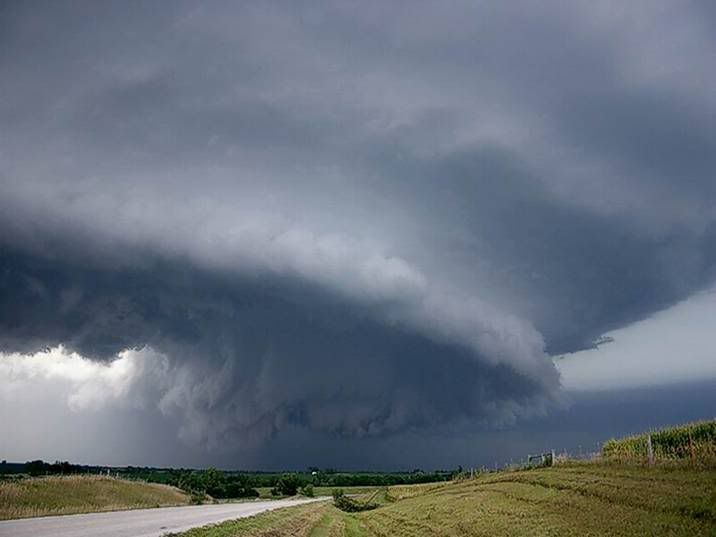
This Sunday, we celebrate Thanksgiving. And, we celebrate the culmination of our annual stewardship campaign, which invites us to "Thank God." And, we celebrate week 3 in our Season of Creation: Storm Sunday. AND, we get to celebrate the baptism of a baby.
This is a lot, but I think it will all work beautifully. (I know my life seems to happen that way--things bunch all up on top of each other.) I believe all this things amplify each other.
See, this week, we celebrate Jesus as one who could still storms. And we give voice to naming God as one who has tremendous power over the world, in Psalm 29.
We'll gather this week to give thanks to God, who has come with us through some storms this year. And, who blesses us all the while (even when things look really lousy).
Whether your storms have been metaphorical or literal--in yourself, in your relationships, in the world--you're invited to get together this week and celebrate that God is with you still. As a community, we celebrate coming through the firestorms of last month, even as we lament all that was lost. And we celebrate that God's spirit is always giving us new life.
It's always exciting to me when the Water's Edge gets to share in offering the holy waters of baptism. I hope you'll come be a part of the celebration.
Tuesday, November 06, 2007
creatures

It's gonna be "Fauna Sunday" this week, as we continue our celebration of the Season of Creation, which means we get to celebrate God's creatures here on earth. (And, I admit and warn you now, some of God's "flora" are likely to crop up, too, as I can't really imagine the "fauna" without them...)
I've been pondering the creatures of the world. When I think of animals and God, my mind nearly always jumps to Isaiah's vision of a "peaceable kingdom" (as in the one painted by Edward Hicks, above). I like creatures in an idealized, perfect world, where lambs and lions can abide in harmony.
I have more trouble with creatures in my everyday life: I'm not a pet person. (I do try to feed the fish at our house regularly, but that's about as good as it gets for me. I like that they stay in their tank and don't infringe on my space...) I think I like my plants more.
I am, however, amazed at the beauty and variety of creatures in this world--the intricate ways they fit together in ecosystems and the diverse adaptations that work for their survival and the survival of others.
All of which I think Jesus was talking about when he preached to the crowds and told them not to worry. It's too easy for all of us to get caught up in worry about what will come next. Or, even, fretting about figuring out how and why things happen. (Particularly, I think, we get seduced by this dangerous way of thinking about God when disaster strikes. We try to console ourselves with the assurance that "everything happens for a reason," as if God intended for tragedies and suffering to happen. As a means to something else. I can't buy that way of thinking.)
I DO, however, affirm that God is present in everything. And that God works with every bit of reality, inviting us to a new possibility. We can use both the tragedies and the triumphs of the world as occasions for doing things that build God's kingdom.
Strive first for the kingdom of God, Jesus says. The rest will work out.
And the crazy part is that when we strive first for the kingdom of God, we find it working out beautifully--not just as a promise for the future, but even in the "now." Loving God and loving neighbor infuses our living with things that are eternal.
Striving first for the Kingdom also means that we use our lives to be stewards of things far beyond ourselves--in an era when we can have dramatic impact on creatures far and near, we are invited to live in ways that ensure the survival and flourishing of other life, too.
So, like last week, we gather again on Sunday to give thanks for God's presence in all creation. (The Psalm will help, again.) And, we challenge ourselves to be changed by that presence.
(Maybe I'll become an animal person, yet.)
Wednesday, October 31, 2007
deep like the ocean
This year, we're celebrating a *new* season in the church year. (I know, I know--it feels weird to be both turning to ancient habits of following church year seasons AND revising them...) The movement to add a new season into the mix started in Australia. We're calling it the Season of Creation.
For us, it will fit into this month--here at the end of the church year, before we start things anew with Advent, in December.
All this month, we'll celebrate the presence of God in creation. This world is an amazing, wondrous home.
This week, we celebrate Ocean Sunday.

In Psalm 104, we read an ancient song of praise for creation. This world is an amazing place, and gives us ways to know God.
In the Gospel lesson, we hear of how Jesus calls those first disciples while they're out fishing on the sea. He invites them to cast their nets into the deep, and they find more fish than they could have imagined catching.
I'm caught on this image, of casting out "into the deep." Maybe it's because I know more scuba divers than I ever have... Maybe it's because things get rich when you dare to "dive" deeper into the realities of the world and the presence of God.
In any case, I hope you'll come dive deep with us on Sunday.
Subscribe to:
Posts (Atom)


