
Today, as I post this, is Ash Wednesday. Ash Wednesday happens to be just about my favorite day in the Christian year. I suspect my love of this day has something to do with its simple, honest grace.
During Lent, we are invited to turn our hearts to God. To do so, we turn our hearts away from everything that has been distracting us from God...
This can be tough, but it's so good--because we know that God's response is loving and gracious. We don't have to wonder, because we know God is loving and gracious, slow to anger and abounding in steadfast love. (I didn't think that up. I just stole it from the Hebrew scriptures.)
So, today, we're invited to turn toward God, and ask for repentance.
The best part, though, are the words we say as we mark each other with ashes: "Remember that you a dust, and to dust you shall return."
Somehow, this is just the grace I need. Right now and every year. I am a connected part of God's good creation. I am dust, just as everyone and everything else is. The world is not on my shoulders. I can savor each day.
Usually, it makes me more able to savor the goodness of the natural world, too: after all, it's dust just like me.
But I digress:
This was supposed to be about this coming Sunday.
During Lent, we're going to think about what it means to "know by heart" and to be "known by heart." Our suspicion is that this "heart" stuff is critical: it helps us remember what it means to belong to God.
You may have heard that Rev. Earl Kernahan, who has been a part of our community for the past two years, died early this Monday morning. In his 93 years of life, and lifetime's worth of ministry, he has shown many of us--near and far--a beautiful witness of what it means to live your faith "by heart." Working for racial reconciliation, for social justice, for the strengthening of communities, against gambling, he lived his deep faith.
When I talked to him recently about the Bible, he had one clear favorite sentence memorized: "God is love."
So, this Sunday in our 9:30 worship, we get to think about how, this Lent, we might get better at living that love.
I also want you to know that you're very welcome to come share in celebration of Rev. Earl's life--we'll gather for a memory service at 12:30 on Sunday, in the Cove.
Wednesday, February 21, 2007

Monday, February 12, 2007
mountaintops

The Water's Edge is moving to the mountains this week! So, if you're joining us in worship, don't go to the usual place in San Diego; go to Camp Cedar Glen in Julian, at 10:30 in the Chapel.
Although it seems a bit sketchy that the "water's edge" should be in the mountains (perhaps it's the mountain spring, the source of the water?), there's certainly precedent for going to the mountains to be a part of something holy.
And, as if by God's grace, this week's scripture passages are about just such events.
In the midst of his earthly ministry, Jesus took three disciples with him, and went up a mountain, where he was "transfigured." That is, he got his glow on. He "shone like the sun." And God reminded those disciples that Jesus was special, and that they should listen to him.
Sometimes, I wish for clarity like that--glowing lights that help me see what is holy, and what I need to pay attention to. But it turns out neon signs are not necessarily God-indicators, and, ironically, I find the dark night of the mountains--far away from the city lights--to give greater clarity.
It's not just Jesus who has a glowing, mountain-top experience, though: our other scripture lesson tells of a time Moses shone brightly , even AFTER coming down from the mountaintop where he received God's law.
So, I'm hopeful that this weekend's time on the mountain will help us glow. Or, at least, remind ourselves how good it is to be together in God's presence. And, perhaps, it will be apparent to the world...
Although it seems a bit sketchy that the "water's edge" should be in the mountains (perhaps it's the mountain spring, the source of the water?), there's certainly precedent for going to the mountains to be a part of something holy.
And, as if by God's grace, this week's scripture passages are about just such events.
In the midst of his earthly ministry, Jesus took three disciples with him, and went up a mountain, where he was "transfigured." That is, he got his glow on. He "shone like the sun." And God reminded those disciples that Jesus was special, and that they should listen to him.
Sometimes, I wish for clarity like that--glowing lights that help me see what is holy, and what I need to pay attention to. But it turns out neon signs are not necessarily God-indicators, and, ironically, I find the dark night of the mountains--far away from the city lights--to give greater clarity.
It's not just Jesus who has a glowing, mountain-top experience, though: our other scripture lesson tells of a time Moses shone brightly , even AFTER coming down from the mountaintop where he received God's law.
So, I'm hopeful that this weekend's time on the mountain will help us glow. Or, at least, remind ourselves how good it is to be together in God's presence. And, perhaps, it will be apparent to the world...
Monday, February 05, 2007
on the level
It may not be as hip as Gwen Stefani this week, but I'm still fixating on words and phrases.
This week, it's about Jesus "leveling" with us.
See, in Matthew's gospel, Jesus gives this famous set of teachings that we often call his "Sermon on the Mount."
In Luke's gospel, we get a set of teachings that start in remarkably similar ways, but this time, we're told, he "came down with them and stood on a level place." A level place. (Not a mountain.)
Perhaps he used riffs of the same sermon twice. (Some of the greatest preachers today also have a set of stories they use over and over...) Or, perhaps the gospel writers used artistic license in telling the stories. Or maybe one gospel-writers "level place" is another gospel writers "mount." Who am I to say.
I'm just enjoying the idea of Jesus going to a "level" place, and leveling with the folks there: telling them some true things about God's reality. Like that the poor are blessed. And so are the broken-hearted, the down-trodden, the outcast and those who suffer hate.
And then, unlike Matthew, he goes straight into more, flip-side, true things about God's reality: "Woe to you who are rich, for you have received your consolation." Woe to the full-up, the comfortable, the popular.
Here again the wisdom of the scripture tells us things are flipping over, getting up-turned, and all changed around.
(Didn't we just get this in Advent, when Mary was singing her Magnificant, and when the tenor in the choir sang Isaiah's words from Handel's Messiah about those valleys being exalted and rough places plain?)
OR...perhaps...
Jesus is preaching to us about how he's flattening out the distinctions we've been using to compare ourselves to others, to remind us how we might be different/better?
On a plain, Jesus plainly speaks the good news that God is making our heaped-up differences and divisions, well, flat like a plain.
Makes me think of how much fun it is to play broomball. You take a group of people, preferably ones who have already decided which of their group is talented at athletics, and which folks are cool, and you throw them into an ice rink. With shoes on. Suddenly, the playing field is leveled. (!) Everyone's lousy at hockey when they slide around on the ice in their silly shoes. Everyone looks silly. And, usually, everyone has a good time. (It helps that youth groups can usually only afford ice time in the middle of the night.)
In the Nebraska plains, we play in our socks on the basketball court. That works, too.
My question is: how can we, as the church, model this making-level that Jesus preaches? In a world filled with divisions, what will bring us to a level spot?
-
And, this week in worship, we'll keep thinking a bit more about resurrection. Not that we'll figure it all out. Paul will have some more words.
This week, it's about Jesus "leveling" with us.
See, in Matthew's gospel, Jesus gives this famous set of teachings that we often call his "Sermon on the Mount."
In Luke's gospel, we get a set of teachings that start in remarkably similar ways, but this time, we're told, he "came down with them and stood on a level place." A level place. (Not a mountain.)
Perhaps he used riffs of the same sermon twice. (Some of the greatest preachers today also have a set of stories they use over and over...) Or, perhaps the gospel writers used artistic license in telling the stories. Or maybe one gospel-writers "level place" is another gospel writers "mount." Who am I to say.
I'm just enjoying the idea of Jesus going to a "level" place, and leveling with the folks there: telling them some true things about God's reality. Like that the poor are blessed. And so are the broken-hearted, the down-trodden, the outcast and those who suffer hate.
And then, unlike Matthew, he goes straight into more, flip-side, true things about God's reality: "Woe to you who are rich, for you have received your consolation." Woe to the full-up, the comfortable, the popular.
Here again the wisdom of the scripture tells us things are flipping over, getting up-turned, and all changed around.
(Didn't we just get this in Advent, when Mary was singing her Magnificant, and when the tenor in the choir sang Isaiah's words from Handel's Messiah about those valleys being exalted and rough places plain?)
OR...perhaps...
Jesus is preaching to us about how he's flattening out the distinctions we've been using to compare ourselves to others, to remind us how we might be different/better?
On a plain, Jesus plainly speaks the good news that God is making our heaped-up differences and divisions, well, flat like a plain.
Makes me think of how much fun it is to play broomball. You take a group of people, preferably ones who have already decided which of their group is talented at athletics, and which folks are cool, and you throw them into an ice rink. With shoes on. Suddenly, the playing field is leveled. (!) Everyone's lousy at hockey when they slide around on the ice in their silly shoes. Everyone looks silly. And, usually, everyone has a good time. (It helps that youth groups can usually only afford ice time in the middle of the night.)
In the Nebraska plains, we play in our socks on the basketball court. That works, too.
My question is: how can we, as the church, model this making-level that Jesus preaches? In a world filled with divisions, what will bring us to a level spot?
-
And, this week in worship, we'll keep thinking a bit more about resurrection. Not that we'll figure it all out. Paul will have some more words.
Wednesday, January 31, 2007
hollaback girl?
Ok, I admit that I've been allowing myself to enjoy a king-sized follow-the-tangents trail as I explore this week's scripture.
It all starts with the beautiful story of Jesus calling Simon, James and John to follow him. Jesus shows them that he has power--and knows to they can catch lots of fish--and Simon immediately recognizes Jesus' deeper authority. And they leave everything to follow him.
This is incredible enough.
But then, my thought continues through a question raised by Karen at a staff meeting this week: are we teaching and showing people that God is calling each one of us today? Sure, we talk about preachers, and maybe even church musicians being "called." But are we open to the callings and promptings God puts on each one of our lives?
Deep stuff.
Then, my thoughts take a sharp detour. I start thinking about the work "call." As in "I just called to say I love you," and "You just call out my name, and you know wherever I am, I'll come running." Phone calls, call-backs, and call-and-response singing. Which, naturally, reminded me of my foray onto urbandictionary.com to see what it means for Gwen Stefani to (not) be a Hollaback Girl. (I know, I'm slow. It's been years since Gwen first went b-a-n-a-n-a-s.)
My favorite explanation was that Gwen was riffing on accusations from Courtney Love that Gwen is a "cheerleader." And everyone knows that cheerleaders have some folks who start cheers, and some folks who lead the response (or, the holla-back girls). So, perhaps, Gwen wanted to say that she may be a cheerleader, but she's the top banana cheerleader?
In any case, I then started thinking about the older tradition of call-and-response preaching and singing. A leader calls out the first line, which brings a rousing response from the people. I know it best from our African-American musical tradition. It's the kind of singing that would lift spirits in church, and while doing back-breaking work together. It relies on a shared community knowledge, and a beautiful interplay of leadership and following.
Which made me wonder if Gwen isn't distracting us from the point: perhaps there is rich blessing in being willing to "hollaback"--especially to God. To continue the story God has begun, and to pass it along to others?
In any case...
I hope you're thinking about how God has called and is calling you.
-
And, as a bonus this week, we'll consider the question a couple of you asked about what resurrection means. (We won't, however, cover this topic completely...) ;) Check out Paul's first letter to the folks in Corinth for more thoughts in preparation for this...
It all starts with the beautiful story of Jesus calling Simon, James and John to follow him. Jesus shows them that he has power--and knows to they can catch lots of fish--and Simon immediately recognizes Jesus' deeper authority. And they leave everything to follow him.
This is incredible enough.
But then, my thought continues through a question raised by Karen at a staff meeting this week: are we teaching and showing people that God is calling each one of us today? Sure, we talk about preachers, and maybe even church musicians being "called." But are we open to the callings and promptings God puts on each one of our lives?
Deep stuff.
Then, my thoughts take a sharp detour. I start thinking about the work "call." As in "I just called to say I love you," and "You just call out my name, and you know wherever I am, I'll come running." Phone calls, call-backs, and call-and-response singing. Which, naturally, reminded me of my foray onto urbandictionary.com to see what it means for Gwen Stefani to (not) be a Hollaback Girl. (I know, I'm slow. It's been years since Gwen first went b-a-n-a-n-a-s.)
My favorite explanation was that Gwen was riffing on accusations from Courtney Love that Gwen is a "cheerleader." And everyone knows that cheerleaders have some folks who start cheers, and some folks who lead the response (or, the holla-back girls). So, perhaps, Gwen wanted to say that she may be a cheerleader, but she's the top banana cheerleader?
In any case, I then started thinking about the older tradition of call-and-response preaching and singing. A leader calls out the first line, which brings a rousing response from the people. I know it best from our African-American musical tradition. It's the kind of singing that would lift spirits in church, and while doing back-breaking work together. It relies on a shared community knowledge, and a beautiful interplay of leadership and following.
Which made me wonder if Gwen isn't distracting us from the point: perhaps there is rich blessing in being willing to "hollaback"--especially to God. To continue the story God has begun, and to pass it along to others?
In any case...
I hope you're thinking about how God has called and is calling you.
-
And, as a bonus this week, we'll consider the question a couple of you asked about what resurrection means. (We won't, however, cover this topic completely...) ;) Check out Paul's first letter to the folks in Corinth for more thoughts in preparation for this...
Monday, January 22, 2007
think about what this is saying...
Reading the scripture passages for this week, my mind jumped to thought of the Yes Men. These guys have made a little career out of posing as representatives from institutions they want to criticize, using a kind of mockery that goes beyond what I've seen before... Posing as World Trade Organization representatives, they've shown up at REAL conferences, after people who visited their mock website invited them. They give presentations on utterly shameful, taken-to-the-extreme, ethically bankrupt ideas.
The amazing thing is that people think they're real. They get away with it, because no one seems to be ready to question them.
All of which makes me think how far we've come from the sharpness of that crowd Jesus talked to in Nazareth. (Or, perhaps, how easy it is to trust someone with a good website and a nice suit?)
In Luke's gospel, when Jesus spoke in Nazareth, he proclaimed, plain and clear, in the words of the Hebrew prophet, Isaiah, what he was about: bringing good news to the poor. Setting the captive free.
Then, the people quickly turn on him. They're quick to see the implications of what he's saying. It's bold and it challenges.
Perhaps the didn't look like the prophet they imagined. Maybe they could sense that he really meant it.
So he has some tough words for them, suggesting that he's not coming for their comfort, but for the lost and marginalized people. This doesn't make them any happier.
But, then, when did Jesus promise a life of easy happiness?
Which brings us, naturally, to our second text, from First Corinthians. This text may sound familiar. We often read it at weddings.
(Which, by odd coincidence some people believe might just be the happiest moments in their lives...)
It's all about love. Not just the love between husband and wife, either: it's the love that's to be shared in the Christian community. And it's not all white doves and flower petals... It's patience and it insists on the truth. It requires that we avoid arrogance, boastfulness, rudeness. I'm still working on these things.
This love, when you read the fine print, is hard stuff. I wonder if we should react more at the boldness and craziness of it all?
The amazing thing is that people think they're real. They get away with it, because no one seems to be ready to question them.
All of which makes me think how far we've come from the sharpness of that crowd Jesus talked to in Nazareth. (Or, perhaps, how easy it is to trust someone with a good website and a nice suit?)
In Luke's gospel, when Jesus spoke in Nazareth, he proclaimed, plain and clear, in the words of the Hebrew prophet, Isaiah, what he was about: bringing good news to the poor. Setting the captive free.
Then, the people quickly turn on him. They're quick to see the implications of what he's saying. It's bold and it challenges.
Perhaps the didn't look like the prophet they imagined. Maybe they could sense that he really meant it.
So he has some tough words for them, suggesting that he's not coming for their comfort, but for the lost and marginalized people. This doesn't make them any happier.
But, then, when did Jesus promise a life of easy happiness?
Which brings us, naturally, to our second text, from First Corinthians. This text may sound familiar. We often read it at weddings.
(Which, by odd coincidence some people believe might just be the happiest moments in their lives...)
It's all about love. Not just the love between husband and wife, either: it's the love that's to be shared in the Christian community. And it's not all white doves and flower petals... It's patience and it insists on the truth. It requires that we avoid arrogance, boastfulness, rudeness. I'm still working on these things.
This love, when you read the fine print, is hard stuff. I wonder if we should react more at the boldness and craziness of it all?
Wednesday, January 17, 2007
power and love
This week, we get to welcome a special guest to help us worship: Lori Persons. Lori is one of our congregation's Covenant Missionaries--which means that we covenant with her to share support. Lori and her husband, David, have been missionaries on our behalf for, well, quite a while. They have spent all that time in the Congo, where they are leaders at in a place called Mulungwishi. She is director of the Women's School of the Faculte Methodiste Theologie in Mulungwishi, Katanga in the Democratic Republic of Congo (DRC).
Lori will speak with us and lead us in conversation. I suspect that her life of serving God in the Congo gives her rich perspective as she imagines what God might be ready to say to us, back here in the States.
I invite you to consider what Paul wrote in 1 Timothy as we get ready to boldly welcome Lori:
"I am grateful to God--whom I worship with a clear conscience, as my ancestors did--when I remember you constantly in my prayers night and day. Recalling your tears, I long to see you so that I may be filled with joy. I am reminded of your sincere faith, a faith that lived first in your grandmother Lois and your mother Eunice and now, I am sure, lives in you. For this reason I remind you to rekindly the gift of God that is within you through the laying on of my hands; for God did not give us a spirit of cowardice, but rather a spirit of power and of love and of self-discipline."
-1 Timothy 1:3-7
Lori will speak with us and lead us in conversation. I suspect that her life of serving God in the Congo gives her rich perspective as she imagines what God might be ready to say to us, back here in the States.
I invite you to consider what Paul wrote in 1 Timothy as we get ready to boldly welcome Lori:
"I am grateful to God--whom I worship with a clear conscience, as my ancestors did--when I remember you constantly in my prayers night and day. Recalling your tears, I long to see you so that I may be filled with joy. I am reminded of your sincere faith, a faith that lived first in your grandmother Lois and your mother Eunice and now, I am sure, lives in you. For this reason I remind you to rekindly the gift of God that is within you through the laying on of my hands; for God did not give us a spirit of cowardice, but rather a spirit of power and of love and of self-discipline."
-1 Timothy 1:3-7
Tuesday, January 09, 2007
You are God's beloved
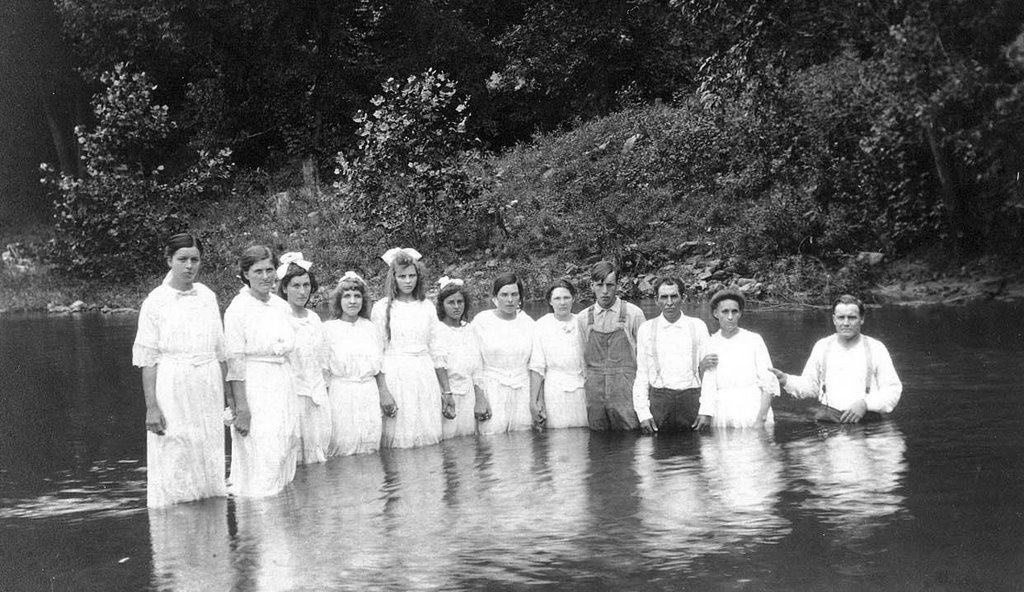
This week we consider the baptism of Jesus, and as we do, we reflect on our own baptism.
Molly's back, fresh from the shimmering waters of Hawaii, and will be talking about the role of water and Spirit in the baptism of Jesus and in ours.
The scriptures this week are
Isaiah 43:1-7
Acts 8:14-7
Luke 3:15-17,21-22
The last verse of the passage from Luke about the baptism of Jesus tells us: "the Holy Spirit descended upon him in bodily form like a dove. And a voice came from heaven, 'You are my Son, the Beloved; with you I am well pleased.'"
It is a beautiful moment of the presence of God, the Spirit and Jesus.
The words apply to us, too. We are God's beloved children, in whom God is well-pleased.
That is the gift of grace.
And, it is an awesome gift to live into.
What can we do to help our faith in God grow nearer to God's faith in us?
(I'm hoping Molly isn't anywhere near a computer this week, but if she is and wants to repost this, have at it.)
Tuesday, December 26, 2006
Resolutions

We gather together this Sunday on the morning of New Year's Eve.
Many of us take a moment or more at the turn of the year to reflect on the year past and to project hopes on the year to come.
As Christians, we enter into these reflections in the aftermath of the joyous celebration of the birth of Jesus.
My question is this: What is our response to that gift of grace embodied in the birth of the infant Jesus and realized in his resurrection? What gifts can we share as our response to God's gift of grace to us?
Our scriptures this week offer some suggestions.
The writer of Ecclesiastes tells us in Ecclesiastes 3:1-13
that there is a time and place for everything and our response is to find joy in all things -- all things. Given the litany of things there is a time and place for, though, this is a bit of a challenge for me.
In the Gospel of Matthew, Jesus
provides a description of discipleship: feed the hungry, provide drink to the thirsty, welcome the stranger, clothe the naked, care for the sick, visit the imprisoned.
Often with New Year's resolutions, we set goals for ourselves that are hopeful but not necessarily realistic. However, we each have gifts that we can draw from as our response to the gift of grace we experienced in the arrival of Jesus. Realistically, what gifts can you resolve to share in the coming year as a response to God's gift of grace?
Monday, December 18, 2006
a nativity
The father of a dear friend helped install this nativity scene at his United Methodist Church in Claremont, CA.
Christ's birth may not be what we expect.
Christ's birth may not be what we expect.
peace on earth
Ok...so a lot of things make me think of U2 songs: reading Mary's story, and her daring song of celebration in Luke's gospel strikes me as more than a bit like "Peace on Earth":
Jesus, in the song you wrote/the words are stick in my throat: Peace on Earth.
We hear it every Christmas time/but hope and history won't rhyme, so what's it worth: Peace on earth.
Her song is a wild promise--so complete that it may seem like pure fantasy. God's promise has been fulfilled.
And yet...
Mary dares to sing a song of celebration. She sings about the work already DONE in God--even as she's just pregnant with Jesus. An unwed mother, destined to be talked about by others, who's gonna have to lay in a manger after he's born, because there won't be any room in the inn--she sings about the work already DONE. (Past tense!)
I wonder what amazing sings of God's reality are all around us--promise as wild as incarnation--but unnoticed or not believed by the rest of us.
I wanna sing like Mary.
And then I wanna live like it's true.
Jesus, in the song you wrote/the words are stick in my throat: Peace on Earth.
We hear it every Christmas time/but hope and history won't rhyme, so what's it worth: Peace on earth.
Her song is a wild promise--so complete that it may seem like pure fantasy. God's promise has been fulfilled.
And yet...
Mary dares to sing a song of celebration. She sings about the work already DONE in God--even as she's just pregnant with Jesus. An unwed mother, destined to be talked about by others, who's gonna have to lay in a manger after he's born, because there won't be any room in the inn--she sings about the work already DONE. (Past tense!)
I wonder what amazing sings of God's reality are all around us--promise as wild as incarnation--but unnoticed or not believed by the rest of us.
I wanna sing like Mary.
And then I wanna live like it's true.
Wednesday, December 13, 2006
john the baptist's guide to christmas preparations
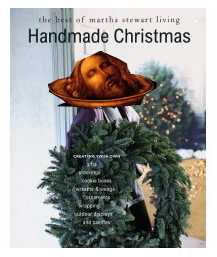
Surprisingly, there's nothing about trimming the tree or baking gingerbread in John the Baptist's advice about how to prepare for Christ's coming.
(There is some talk about an ax cutting a tree, but I think he's talking about something else...)
The juxtapositioning of wild, prophetic, going-to-be-beheaded John the Baptist and our sweet Christmas traditions seems downright twisted.
Of course, technically, this was already many years after that first Christmas when he gives the advice in today's scripture, since it's an adult John who talks here, and we know that he and Jesus were both in their mothers' wombs at the same time. Time complicates things...
NONETHELESS, we talk about John B as we get ready for Christmas. And, helpfully, he has some advice about how to get ready. (I wonder if Martha Stewart ever feels indebted to John for pioneering this field?)
He says some pretty smart things, things that may really, literally, help us. Even today:
If you have 2 coats, give one of them to someone who needs one.
Don't cheat other people, by taking more than is fair.
This is good stuff. He seems to be imagining a more-fair, more beautiful world.
His advice would lead us to live in a world very unlike the one the Old Testament prophet, Zephaniah, describes. There, things are so bad that God has to turn everything over--making the "lame and outcast" into the most powerful and celebrated.
I invite you to think about what that would look like today--who are the most outcast in our midst, or in our world? And what would it look like for them to be lifted up, exalted, celebrated?
Tuesday, December 05, 2006
Waiting or preparing?

Advent is often described as a time of waiting for the arrival of Christ in the manger on Christmas Eve, celebrated each year in Christ's Mass -- Christmas.
Last week on the first Sunday in Advent, we were told of signs of something yet to come, signs of something spectacular, signs of the bold presence of God among us.
Every second Sunday in Advent, like a crazy uncle (sorry, Mom) come early for the holidays, we get John the Baptist,
wild-eyed and intent on delivering the word of God that has come to him in the wilderness.
John tells us to prepare the way for the Lord. He even offers a few helpful tips: repent and be baptized for the forgiveness of sins. He foretells of the one who will come to baptize not with water but with the Holy Spirit.
But what is our response to that grace? How do we prepare ourselves not just for the arrival of Christ at Christmas but for the presence of Emmanuel -- God among us -- every day?
We'll also hear from the prophet Malachi and we may even spend some time with the prophetic song of Zechariah.
What are your thoughts?
Tuesday, November 28, 2006
the signs are everywhere
Our scripture passages are telling it to us, loud and clear: it's time to get ready. The signs are all around us, that it's just about time.
Trick is, the signs that the scripture are talking about don't have much to do with making sure our presents are all purchased (wrapped, and, if necessary, mailed...) They're actually not at all like the signs that invite us to buy more, for cheaper.
Instead, these are signs of the inbreaking of God's spirit--which is getting ready to come into the world as a little bitty baby.
Jeremiah and Jesus, in Luke both tell us to get ready, to be on guard, and to notice the signs around us.
Which brings me to the question Karen and I want to pose for us all, this year, during Advent:
where do you see signs of God's light, of the (subtle?) inbreaking of God's world, this year?
Trick is, the signs that the scripture are talking about don't have much to do with making sure our presents are all purchased (wrapped, and, if necessary, mailed...) They're actually not at all like the signs that invite us to buy more, for cheaper.
Instead, these are signs of the inbreaking of God's spirit--which is getting ready to come into the world as a little bitty baby.
Jeremiah and Jesus, in Luke both tell us to get ready, to be on guard, and to notice the signs around us.
Which brings me to the question Karen and I want to pose for us all, this year, during Advent:
where do you see signs of God's light, of the (subtle?) inbreaking of God's world, this year?
Monday, November 20, 2006
get in on the action
Since I'm not preaching at Water's Edge this week, I thought I'd use a post to shamelessly recruit for our church's "big mission project." (Shameless because I share it with the joy of the Lord...)
We've been talking a long time about doing a "big" project, to be in ministry with people living in poverty in San Diego.
Now, we have some basic values, some priorities that come of our a bunch of interviews our church folk did with folks in Mid-City San Diego, and some next steps.
You can take those next steps.
We're looking for people who will volunteer during the rest of this school year for 3 things (but, especially, the first):
1--volunteer in a school in Mid-City, helping with an existing program. This could be as easy as reading with a 3rd grade student who is behind in reading level. There are volunteer options for a variety of interests and skill levels.
2--help us shape longer-term plans and do research and planning
3--pray
If you're willing to jump on-board, or just want to know more, visit the church website for the project. (And you can see a stunning quicktime movie about the project, starring some of our Water's Edge own!
We've been talking a long time about doing a "big" project, to be in ministry with people living in poverty in San Diego.
Now, we have some basic values, some priorities that come of our a bunch of interviews our church folk did with folks in Mid-City San Diego, and some next steps.
You can take those next steps.
We're looking for people who will volunteer during the rest of this school year for 3 things (but, especially, the first):
1--volunteer in a school in Mid-City, helping with an existing program. This could be as easy as reading with a 3rd grade student who is behind in reading level. There are volunteer options for a variety of interests and skill levels.
2--help us shape longer-term plans and do research and planning
3--pray
If you're willing to jump on-board, or just want to know more, visit the church website for the project. (And you can see a stunning quicktime movie about the project, starring some of our Water's Edge own!
Monday, November 13, 2006
giving birth to something new?
My first reaction, as I turned to this week's scripture was: "Oh geez. Another good story--but why do all these stories end with women giving birth, as if that's the end-all, be-all?"
Last week, it was Naomi (through Ruth's childbearing) being restored to motherhood.
This week, it's Hannah, finally bearing a child, after all those years of suffering in childlessness, comparing herself to the other wife: the fertile but less-loved Peninnah. Despite her husband's assurances that she's loved abundantly, she prays so fervently for a child that the PRIEST thinks she's drunk or crazy. God hears her prayer, and "opens her womb."
And Samuel is born.
I admire her faithfulness, and her determination. Her willingness to look like a fool, for the sake of seeking after God's blessing.
I just wonder why God's blessing so often is portrayed in the shape of a child. I've known plenty of women (and men, for that matter) who have lived faithful and inspirational lives, without ever having given birth...
Then, I turned to the Gospel lesson. And her, the birthing is metaphorical. And big-time. In Mark, we experience birth pangs--not from the birth of a little child, but from the birth of God's new creation.
Oddly, this is reassuring to me: perhaps all this talk of giving birth is about much, much more than little babies. Perhaps this talk is again reminding us that we are all suitable for the work of bringing God's creation into the world.
Just last week, I was chatting with a father before Water's Edge. We were talking about one of his kids. And delighting in her personality, intelligence, and thoughtful concern. "I've never though of my kids as 'my' kids," he said. He said it's more like they are these strange creatures of God who he's given responsbility to take care of, for a time. And it's incredible to watch them.
Perhaps our scripture records so many stories of God working to fulfill us, in stories of women giving birth, because they help us know something about the wonder of God's work: it begins in our care, but grows and far beyond our reach.
Last week, it was Naomi (through Ruth's childbearing) being restored to motherhood.
This week, it's Hannah, finally bearing a child, after all those years of suffering in childlessness, comparing herself to the other wife: the fertile but less-loved Peninnah. Despite her husband's assurances that she's loved abundantly, she prays so fervently for a child that the PRIEST thinks she's drunk or crazy. God hears her prayer, and "opens her womb."
And Samuel is born.
I admire her faithfulness, and her determination. Her willingness to look like a fool, for the sake of seeking after God's blessing.
I just wonder why God's blessing so often is portrayed in the shape of a child. I've known plenty of women (and men, for that matter) who have lived faithful and inspirational lives, without ever having given birth...
Then, I turned to the Gospel lesson. And her, the birthing is metaphorical. And big-time. In Mark, we experience birth pangs--not from the birth of a little child, but from the birth of God's new creation.
Oddly, this is reassuring to me: perhaps all this talk of giving birth is about much, much more than little babies. Perhaps this talk is again reminding us that we are all suitable for the work of bringing God's creation into the world.
Just last week, I was chatting with a father before Water's Edge. We were talking about one of his kids. And delighting in her personality, intelligence, and thoughtful concern. "I've never though of my kids as 'my' kids," he said. He said it's more like they are these strange creatures of God who he's given responsbility to take care of, for a time. And it's incredible to watch them.
Perhaps our scripture records so many stories of God working to fulfill us, in stories of women giving birth, because they help us know something about the wonder of God's work: it begins in our care, but grows and far beyond our reach.
Monday, November 06, 2006
figuring out who to learn from
As we watched "Invisible Children" at our movie night on Saturday, I was moved by the gratitude of children living in the midst of human atrocity in northern Uganda. At night, when these children walk into the city to sleep in crowded, makeshift shelter so they won't be abducted by the LRA rebel army, they often sing praises.
Sing praises?
I think about our own singing. Sometimes we catch the spirit, but it doesn't much compare to the joy of the songs and dances I saw children in Uganda share in, in this film.
Maybe we need to learn something from their joy and gratitude.
Then, I read this week's scriptures.
In the end of Ruth's story Ruth's story, we see how Ruth, a widow who chooses to become a foreigner to remain in community with her mother-in-law, makes possible Naomi's restoration. (We're not going to read all those verses in worship, so you'll want to see what's all in there so it makes sense when we skip some...)
Then, in Mark's gospel, we get the story of a widow who showed-up the scribes in her faithful giving. Though she had just "two small copper coins, which are worth a penny," she puts in everything she has. She gives her whole self.
Just like Ruth, I think--two widows who give their whole selves for the sake of faithful living.
I wonder what it would look like for us to give our "whole selves"?
______________________________________________
And, while you're meditating on that, I want to remind you that we're looking for folks who want to help with worship during Advent. On these four Sundays in December, we get ready for Christ's birth. If you have gifts or passions for decorating and designing spaces, for creating videos, for writing prayers, please let Karen or me know--we would love to have you be a part of our worship planning.
Sing praises?
I think about our own singing. Sometimes we catch the spirit, but it doesn't much compare to the joy of the songs and dances I saw children in Uganda share in, in this film.
Maybe we need to learn something from their joy and gratitude.
Then, I read this week's scriptures.
In the end of Ruth's story Ruth's story, we see how Ruth, a widow who chooses to become a foreigner to remain in community with her mother-in-law, makes possible Naomi's restoration. (We're not going to read all those verses in worship, so you'll want to see what's all in there so it makes sense when we skip some...)
Then, in Mark's gospel, we get the story of a widow who showed-up the scribes in her faithful giving. Though she had just "two small copper coins, which are worth a penny," she puts in everything she has. She gives her whole self.
Just like Ruth, I think--two widows who give their whole selves for the sake of faithful living.
I wonder what it would look like for us to give our "whole selves"?
______________________________________________
And, while you're meditating on that, I want to remind you that we're looking for folks who want to help with worship during Advent. On these four Sundays in December, we get ready for Christ's birth. If you have gifts or passions for decorating and designing spaces, for creating videos, for writing prayers, please let Karen or me know--we would love to have you be a part of our worship planning.
Monday, October 30, 2006
Getting closer
By the end of last week, I came to believe that "restoration," for both Job and Bartimaeus, has more to do with being reconciled with a community than it has to do with gaining wealth, children, or even vision.
And this week, it seems like our Bible stories just keep luring us to draw even more closely together.
First, Ruth's story begins with tremendous grief (and you thought things would get better when we finished Job's story!). Right on the heels of grief, though, is a bold choice: Ruth chooses to cling to her mother-in-law, and to return with her (Naomi) to Naomi's homeland, a foreign place for Ruth. Now, choosing belonging to mothers-in-law may sound odd in our own culture, but Ruth's choice was daring for even more reasons. Somehow, though, God lures her to take up this solidarity. And we know the end of the story: Ruth enables Naomi to become a mother again, and one of her descendents will be Jesus.
Then, Jesus reminds us of the greatest of all the commandments: to love God with heart, soul, mind and strength, and to love neighbors as ourselves. The closeness comes not only in loving neighbors as ourselves, but in how close this work brings us to God's kingdom.
This is good stuff: after all those weeks when the disciples kept getting it wrong, we finally get a glimpse of what would be right (or close-to-right, which may now count in horseshoes, hand grenades, and God's kingdom-building...). It's in loving others.
And I suspect that when he says "neighbors," Jesus means to direct us to love others who may be more difficult for us to love.
(Maybe even as difficult to love as that creepy guy who seems to lead the "Others" on Lost... I digress.)
And this week, it seems like our Bible stories just keep luring us to draw even more closely together.
First, Ruth's story begins with tremendous grief (and you thought things would get better when we finished Job's story!). Right on the heels of grief, though, is a bold choice: Ruth chooses to cling to her mother-in-law, and to return with her (Naomi) to Naomi's homeland, a foreign place for Ruth. Now, choosing belonging to mothers-in-law may sound odd in our own culture, but Ruth's choice was daring for even more reasons. Somehow, though, God lures her to take up this solidarity. And we know the end of the story: Ruth enables Naomi to become a mother again, and one of her descendents will be Jesus.
Then, Jesus reminds us of the greatest of all the commandments: to love God with heart, soul, mind and strength, and to love neighbors as ourselves. The closeness comes not only in loving neighbors as ourselves, but in how close this work brings us to God's kingdom.
This is good stuff: after all those weeks when the disciples kept getting it wrong, we finally get a glimpse of what would be right (or close-to-right, which may now count in horseshoes, hand grenades, and God's kingdom-building...). It's in loving others.
And I suspect that when he says "neighbors," Jesus means to direct us to love others who may be more difficult for us to love.
(Maybe even as difficult to love as that creepy guy who seems to lead the "Others" on Lost... I digress.)
Monday, October 23, 2006
Film Series--films for thought
Join us on Saturdays in November for a series of 3 thought-and-dialogue-provoking films. We'll watch them the first 3 Saturdays in November, at 6:30 p.m. in the Cove. All are welcome, and it's FREE.
Nov. 4--Invisible Children
discover the atrocity in Northern Uganda through the eyes of 3 young SoCal filmmakers
Nov. 11--Gunner Palace
a view of the war in Iraq, told through the voices of soldiers stationed in a former palace
(my husband, Matt, who was stationed breifly at the Palace where this film is set during his year in Iraq, promises to come for this one...)
Nov. 18--Wal-Mart: the high cost of low price
a look at the deeper costs of Wal-Mart’s policies, and an invitation to look at what we value most
We hope you'll join us as we let these films raise questions for our discussion.
See you there?
Nov. 4--Invisible Children
discover the atrocity in Northern Uganda through the eyes of 3 young SoCal filmmakers
Nov. 11--Gunner Palace
a view of the war in Iraq, told through the voices of soldiers stationed in a former palace
(my husband, Matt, who was stationed breifly at the Palace where this film is set during his year in Iraq, promises to come for this one...)
Nov. 18--Wal-Mart: the high cost of low price
a look at the deeper costs of Wal-Mart’s policies, and an invitation to look at what we value most
We hope you'll join us as we let these films raise questions for our discussion.
See you there?
happy ending?
This week we get to the end of Job's story (literally, even--he dies, old and "full of days").
Here's a link to Job 42
At first read, it looks like a happy ending.
But there are still some questions--
like that it's not entirely satisfying that he suffered so much at all, or that God would allow us to be used in a contest with Satan;
and that it feels odd he had to "repent" before receiving his blessings, when he hadn't really deserved the suffering that raised his questions;
and that, even though he got new riches and new kids, God certainly didn't undo the depth of grief he went through. As Karen keeps reminding me when we talk of Job, the kids in the "happy ending" weren't the same kids.
The Gospel lesson this week provides similar challenge, especially as we seek to be a community that is truly inclusive of people living with disabilities: we read of and celebrate Bartimaeus's healing from blindness, but resist believing that blind people need to be healed to be whole.
You can read Mark 10:46-52
Perhaps the "happy ending" we seek is much harder to describe and to envision.
My own experience is that good endings in the stories of my friends' lives are seldom tidy. New love kindled out of grief does not erase grief. New joy in a child's birth does not undo the pain of a long struggle for fertility.
Instead, new restoration invites us to a place we've never been before, to a new possibility and hope lived out not in getting back to what we knew before (in the "good old days"), but in moving forward to new possibilities.
Here's a link to Job 42
At first read, it looks like a happy ending.
But there are still some questions--
like that it's not entirely satisfying that he suffered so much at all, or that God would allow us to be used in a contest with Satan;
and that it feels odd he had to "repent" before receiving his blessings, when he hadn't really deserved the suffering that raised his questions;
and that, even though he got new riches and new kids, God certainly didn't undo the depth of grief he went through. As Karen keeps reminding me when we talk of Job, the kids in the "happy ending" weren't the same kids.
The Gospel lesson this week provides similar challenge, especially as we seek to be a community that is truly inclusive of people living with disabilities: we read of and celebrate Bartimaeus's healing from blindness, but resist believing that blind people need to be healed to be whole.
You can read Mark 10:46-52
Perhaps the "happy ending" we seek is much harder to describe and to envision.
My own experience is that good endings in the stories of my friends' lives are seldom tidy. New love kindled out of grief does not erase grief. New joy in a child's birth does not undo the pain of a long struggle for fertility.
Instead, new restoration invites us to a place we've never been before, to a new possibility and hope lived out not in getting back to what we knew before (in the "good old days"), but in moving forward to new possibilities.
Monday, October 16, 2006
perspective
We continue to follow Job's story this week. And now, after having seen this "deal" between God and Satan, the suffering of Job, the inadequacy of his friends' answers, and Job's big questions, we finally get God's answers. And it puts everything in a whole new perspective.
Makes me think of that Far Side cartoon where two bugs sit back (on a blade of grass or mushroom or something), look up at the stars, and muse about how the night sky makes them feel small...
God is so much bigger than we are--it's mindblowing to even begin to imagine God's own perspective.
Our reading this week is Job 38:1-7, 34-41. Plus, to deepen the conversation, Mark 10:35-45.
Makes me think of that Far Side cartoon where two bugs sit back (on a blade of grass or mushroom or something), look up at the stars, and muse about how the night sky makes them feel small...
God is so much bigger than we are--it's mindblowing to even begin to imagine God's own perspective.
Our reading this week is Job 38:1-7, 34-41. Plus, to deepen the conversation, Mark 10:35-45.
Subscribe to:
Posts (Atom)

